
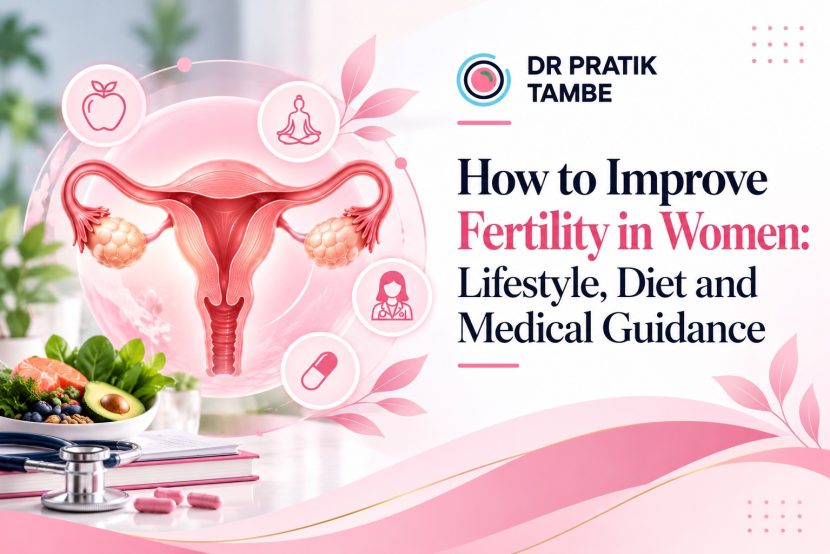
Fertility is determined by many factors, including age, hormones, ovulation, reproductive health, and overall wellness. When preparing for conception, it is essential to understand how to improve fertility in women and take control over the situation.
While there are many fertility tips for women that can positively affect the chances of getting pregnant, they are not enough in some situations. It is critical to consult a doctor in cases of PCOS, endometriosis, blocked fallopian tubes, and other conditions.
This article will discuss the ways of improving female fertility, including diet and lifestyle changes, tracking ovulation, and visiting the fertility doctor.
What Is Female Fertility?
Female fertility can be described as the female’s ability to conceive and carry a child during pregnancy. Several key processes must occur for this to happen, including the ovulation of an egg, sperm penetrating the egg, the egg moving through the fallopian tube, and finally the implantation of the fertilized egg into the uterus.
A variety of different factors can affect a woman’s fertility, such as
- her age and the quality of her eggs,
- the regularity of her ovulation cycle,
- hormones, ovarian reserve, the condition of her uterus and fallopian tubes,
- any reproductive problems that she might have, as well as
- her general health and lifestyle choices.
Understanding these factors is an important part of any effort to improve female fertility.
How to Improve Fertility in Women Naturally
Natural methods can help support overall health and reproductive function, but their outcomes depend on your circumstances, and they cannot guarantee conception.
1. Maintain a balanced and nutritious diet
A balanced diet provides essential nutrients that support general health, hormone function, and preparation for pregnancy.
Focus on variety rather than specific fertility foods.
Include:
- Fruits and vegetables: to provide vitamins, minerals, antioxidants, and fibre.
- Whole grains: such as oats, whole-wheat roti, brown rice, and others.
- Protein-rich foods: lentils, beans, chickpeas, eggs, fish, tofu, or others.
- Healthy fats: nuts, seeds, olive oil, etc.
- Calcium-rich foods: milk, yoghurt, or alternatives if needed.
A balanced diet can aid reproductive health, particularly by addressing nutritional deficiencies or underlying health issues.
However, there is no specific food or diet proven to guarantee pregnancy or reverse age-related changes in egg quality.
2. Maintain a Healthy Body Weight
Body weight can affect hormone levels and ovulation.
Having too little weight can throw off your cycle, and extra pounds can lead to ovulation problems in women with PCOS.
If you think your weight could be impacting your fertility, speak with a medical professional or dietitian about making gradual changes to your eating and exercise habits.
Don’t go on a crash diet or try to over-exercise to lose weight if you’re trying to get pregnant.
These activities can wreak havoc on your menstrual cycle and overall health.
A medical professional or dietitian can help you decide if and how you should change your diet or exercise to improve your fertility
3. Exercise Regularly
Regular physical activity is essential for the heart, metabolism, and overall well-being.
Walking, swimming, bicycling, yoga, and some strength training are healthy forms of exercise.
Working out might be especially beneficial for women with PCOS and insulin resistance when done in addition to the right type of medical care and diet.
On the other hand, strenuous physical activity and calorie restriction are capable of disrupting the menstrual cycle by causing ovulation issues.
As a result, a woman should pick an exercise program based on her current health state and level of fitness instead of going on a vigorous journey that will tax the body severely.
4. Understand Your Menstrual Cycle and Ovulation
Knowing when you are ovulating can help you identify your fertile window.
What is ovulation?
Ovulation occurs when an egg is released from an ovary. A woman’s fertile window extends five days before ovulation and the day of ovulation. Your highest chance of getting pregnant is in the days leading up to ovulation.
- How can I identify my fertile window?
- Using a menstrual calendar app or keeping a written record of your cycle
- paying attention to changes in cervical mucus
- using ovulation predictor urine tests,
- seeking medical guidance.
Ovulation predictor tests identify LH surges that predict ovulation. However, these tests can be less accurate in women with PCOS.
How often should I have sex to get pregnant?
Many couples find that having sex every day or every other day during the fertile window helps them get pregnant.
When should I see a doctor about my fertility?
If you have absent or irregular periods, it’s best to speak with your doctor about becoming pregnant instead of relying on ovulation prediction tools.
5. Prioritise Sleep and Manage Stress
Sleep and emotional well-being are important parts of overall health when preparing for pregnancy.
Try to maintain a consistent sleep schedule, create a comfortable sleeping environment, and aim for adequate rest.
Stress management techniques may include:
- Gentle yoga or stretching
- Meditation and breathing exercises
- Walking outdoors
- Spending time with supportive friends and family
- Speaking with a counsellor when needed
Fertility difficulties can themselves cause considerable stress. It is important not to blame yourself for difficulty conceiving or assume that stress alone is responsible for infertility.
Relaxation and counselling can support emotional well-being, but they should not replace medical assessment when fertility problems are suspected.
6. Avoid Smoking and Limit Alcohol
Smoking can have a negative effect on your fertility and cause poor outcome of conception, while second-hand smoke exposure is also dangerous.
Therefore, it is vital to stop smoking when trying to get pregnant.
Moreover, it is better to stop drinking alcohol because there is a possibility of getting pregnant before realizing that one is pregnant.
It is also critical to stop using recreational drugs and consult a health professional about the use of any medicine.
7. Take Folic Acid Before Pregnancy
Folic acid intake is recommended before conception because of its proven ability to prevent neural tube disorders in a child.
The current standard public health recommendation for women of childbearing age is to take 400 mcg of folic acid every day, starting at least one month before conception and continuing through the first trimester, unless otherwise directed by a healthcare provider.
Some women will need to take more than the recommended dose, for example, if facing specific health challenges or taking specific medications.
Folic acid is a nutrient necessary for fetal development but has no proven fertility benefits.
Before taking additional supplements or prenatal vitamins, consult with your healthcare provider.
Which Medical Conditions Can Affect Female Fertility?
Lifestyle measures are beneficial, but some fertility issues require investigations to identify the underlying problem and determine the most suitable treatment.
Common Medical Conditions Affecting Fertility
PCOS
PCOS stands for polycystic ovary syndrome. It is a hormonal disease that causes infrequent ovulation, irregular periods, acne, unwanted hair growth, and irregular ovulation.
Since women with PCOS can have irregular ovulation, it is more difficult for them to get pregnant. The treatment for PCOS depends on whether the patient has other metabolic problems, is trying to get pregnant, and other factors related to the individual’s PCOS.
Thyroid Problems
An underactive or overactive thyroid gland can cause irregularity and impact fertility. Therefore, if your doctor suspects that you have thyroid dysfunction based on your symptoms, menstrual irregularity, and other considerations, they will recommend a thyroid function test.
If the test confirms the suspicion, the doctor will devise a treatment plan for normalizing your thyroid function and, by extension, your hormone system and reproductive health.
Endometriosis
Endometriosis is a condition in which tissue similar to the lining of your uterus grows outside of it. It can cause painful periods, infertility, and pelvic pain.
The course of treatment depends on several factors: the severity of the condition, the patient’s age, and whether they wish to become pregnant.
Blocked Tubes
The fallopian tubes are the places where egg cells and sperm cells meet. They also play a role in the transportation of the fertilized egg to the uterus.
The tubes can be inaccessible due to various reasons, in which case a woman needs assisted reproductive technology to get pregnant. Tubal surgery is an option for some patients with blocked fallopian tubes; however, it only works for some cases.
Low Ovarian Reserve
Your ovarian reserve is the number of eggs in your ovaries. With advancing age, the quantity of eggs decreases, but every woman’s body can respond differently to stimulation.
Ovarian reserve tests are generally indicated before ovarian stimulation, especially if there are concerns about low ovarian response. However, it is essential to note that these tests only reflect the general quantity of the eggs, and not their quality, and cannot independently predict pregnancy outcome.
Can Supplements Improve Fertility in Women?
Some supplements are necessary in the case of a nutritional deficiency or a doctor’s recommendation.
Although there is insufficient information regarding most products intended for fertility, the above advice is a must before going on any supplements.
Take folic acid as instructed before becoming pregnant.
Ask your doctor if you need additional supplements such as iron, vitamin D, vitamin B12, or any others.
Do not take large doses of vitamins or minerals because it can actually cause deficiencies.
It’s best to talk to your doctor about any herbs or products that you are considering as they could be dangerous or not advisable while pregnant or breastfeeding.
Remember, do not substitute investigating irregular periods or possible ovulation issues for a supplement.
Doctors can’t address these issues without discussing them.
When Should You Consult a Fertility Specialist?
Being able to recognize the time to seek medical advice is an important component of understanding how to increase fertility in women.
General guidelines recommend that couples try to conceive for a period of time before seeking medical assistance.
The suggested time varies depending on a woman’s age and includes the following:
Under age 35: after 12 months of attempting to conceive
Age 35-39: after 6 months of attempting to conceive
Age 40 and older: seeking medical assistance sooner rather than later is advised
Furthermore, it is recommended to see a fertility specialist sooner if there is a history of irregular or absent menstrual periods, endometriosis, pelvic infections, fallopian tube issues, miscarriages, or other relevant medical conditions.
A fertility evaluation typically consists of a discussion of medical history, an assessment of ovulation, and tests to evaluate the condition of the fallopian tubes and uterus if needed, as well as a semen analysis. Both partners may be evaluated since fertility issues can arise on either side.
How Can IVF Help Women Experiencing Fertility Problems?
In vitro fertilization, also known as IVF, is a form of assisted reproductive technology that involves the extraction of eggs, the combination of the egg and sperm in a laboratory, and the implantation of a viable embryo into the uterus.
IVF can be considered in cases of damaged fallopian tubes, male infertility, endometriosis, and unexplained infertility that have failed to respond to other forms of treatment.
However, it is not indicated in all infertile women. The choice of treatment options depends on the woman’s ovarian reserves, age, number of abortions, and the etiology of infertility. Other treatments may include inducing ovulation, treating an underlying disease, or using alternative fertility treatments. A fertility specialist can advise on the available options, risks, benefits, costs, and prognosis.
Conclusion
Understanding ways how to improve fertility in women starts with taking note of the different variables that play a role in the process. Eating healthy foods, exercising, getting the right amount of sleep, not smoking, and tracking ovulation are just a few of the things one can do to boost their chances of getting pregnant.
But, there are some underlying medical conditions that can have a negative impact on female fertility. It is, therefore, essential to take a trip to your family doctor or an IVF specialist if you are unable to get pregnant after a long period of time because they may be able to offer you effective solutions for your specific condition.
Moreover, you should also avoid harmful lifestyle habits that could potentially hinder the whole conception process. A fertility specialist can give you a comprehensive analysis of your current situation and go over all the options and solutions that can improve your chances of successful conception.
Therefore, it is advisable to contact one of the fertility experts at IVFDoctors.in today to set up an appointment.
FAQs:
Focus on maintaining a healthy lifestyle,paying attention to nutrition and leading a healthy lifestyle. It is important to quit smoking, maintain an average level of physical activity, get enough sleep, and monitor the fertile period. However, these measures are not exhaustive, and they do not always fix the existing problems.
A balanced diet that includes all food groups in the right proportions will help the body get all the nutrients and prepare the body for pregnancy. There is no specific fertility diet that is proven to help conceive.
It can be a sign of ovulation problems or another disease that requires therapy. It is important to consult an infertility specialist to identify the reason and treat it.
It does – the older a woman is, the lower her fertility is due to the natural decline of egg quality and quantity. It is advised to consult a fertility specialist 6 months after the age of 35 if pregnancy attempts have failed.
It is important to take folic acid during pregnancy, as it reduces the risk of defects of the fetus’s nervous system. However, it is not a fertility drug and it does not stimulate egg production in women.
If you have been pregnant within a year after you started trying, you do not have any problems. However, if you are 35 years old or older and it took you more than six months to get pregnant, it is time to visit an infertility specialist. People with irregular menstrual cycle or other gynecologic issues should also pay attention.
It can be one of the options if you have specific problems, but it is not always indicated. A fertility specialist will evaluate your case and suggest the best individual choice.
